Product development

Innovation that improves selection, manufacturing and delivery.

We treat product development as a controlled process: a market requirement becomes an engineered product that can be verified, repeated and reordered.

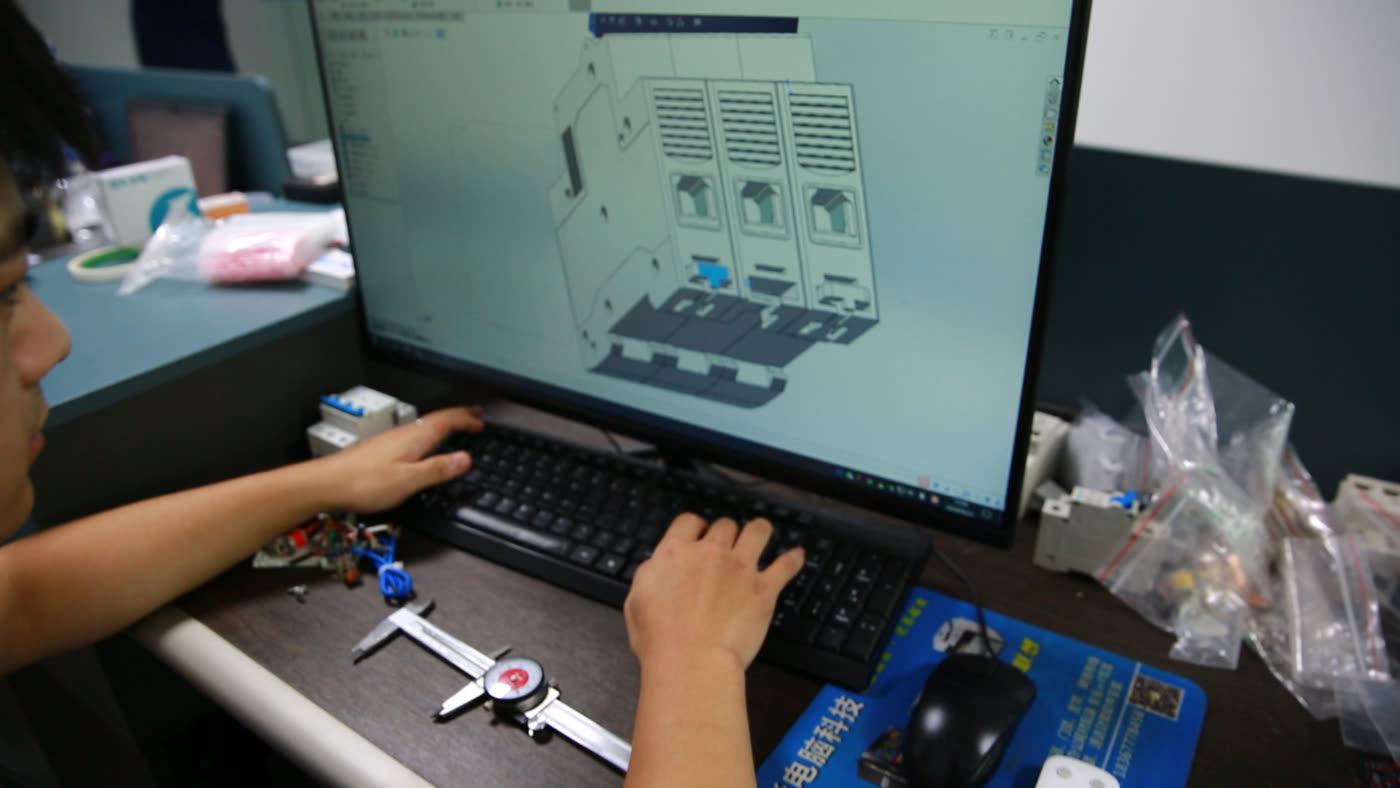
LAIWO engineer developing a circuit breaker design at a CAD workstation

A six-stage development loop.

The value is not novelty alone; it is turning a buyer requirement into a product and documentation package that can be evaluated and reordered.

Metal enclosure forming on the LAIWO production line
01

Tooling and forming

Metal enclosure bodies are drawn in a single operation from one piece of steel rather than folded and welded from cut panels. It costs more in tooling and pays back in panel gaps that stay the same from the first unit to the last.

  • Single-operation draw forming
  • In-house precision tooling
  • Dimensional repeatability across a run
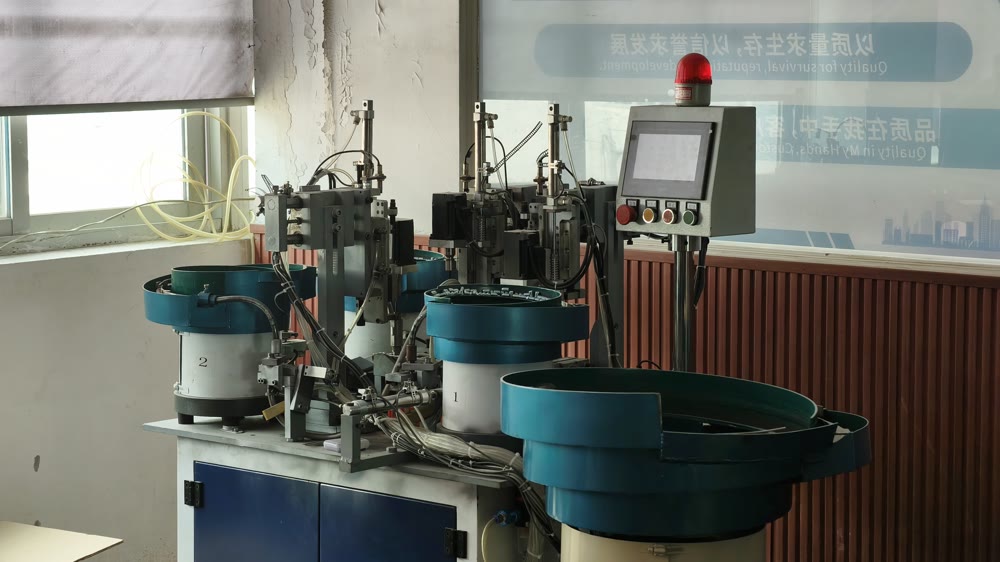
Component feeding on the assembly line
02

Material engineering

Material choices are made against how a product fails, not against a datasheet. Flame-retardant grades where heat is the risk, copper where conductivity and long-term contact resistance matter, porcelain where an arc has to be contained.

  • Flame-retardant ABS bodies and polycarbonate covers
  • Copper and brass conductive parts
  • High-frequency porcelain on fuse bodies
  • UV and weather resistance on outdoor ranges
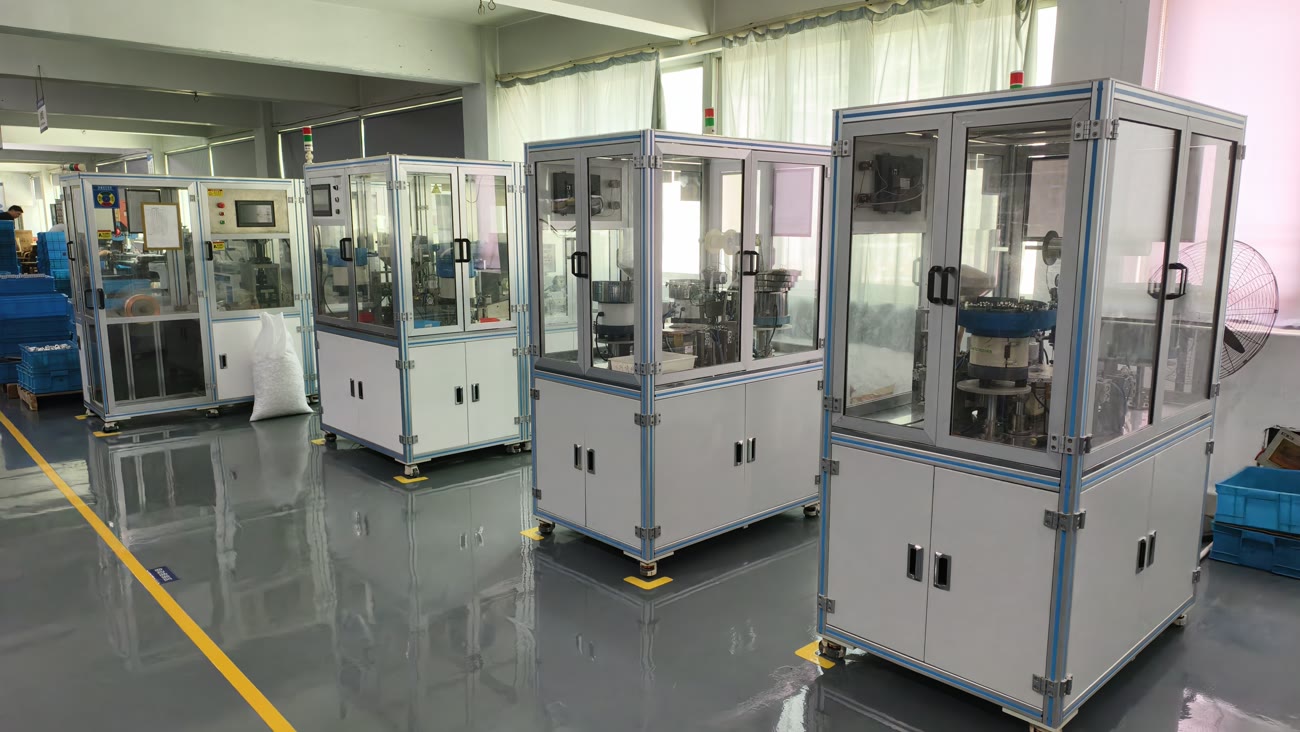
Automated assembly equipment for circuit protection devices
03

Automation on the line

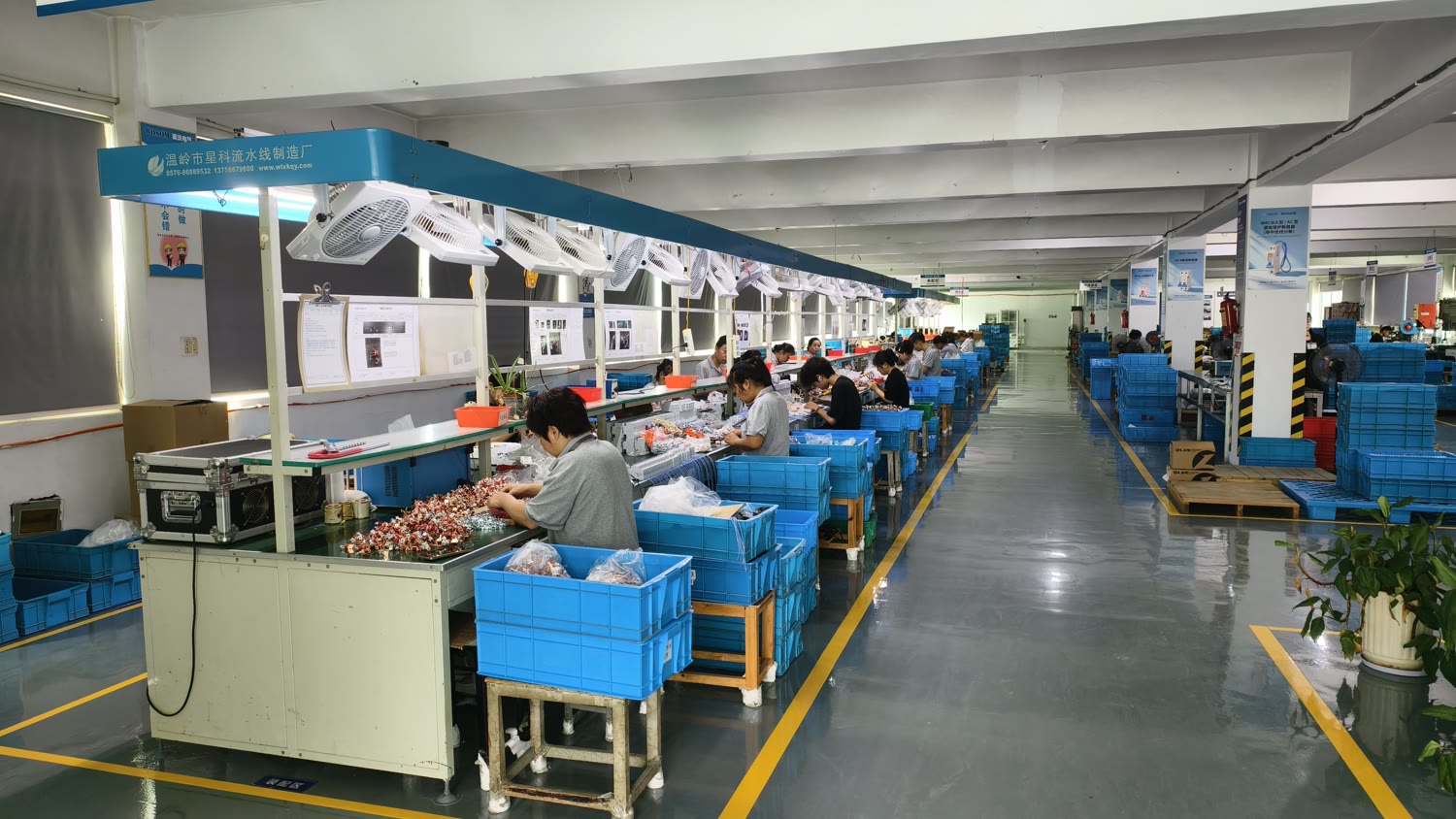
Automated feeding and assembly is used where human variation shows up in the finished device — component placement, repeatable torque, consistent marking.

  • Automated component feeding
  • Assembly automation at critical stations
  • Laser marking for permanent identification
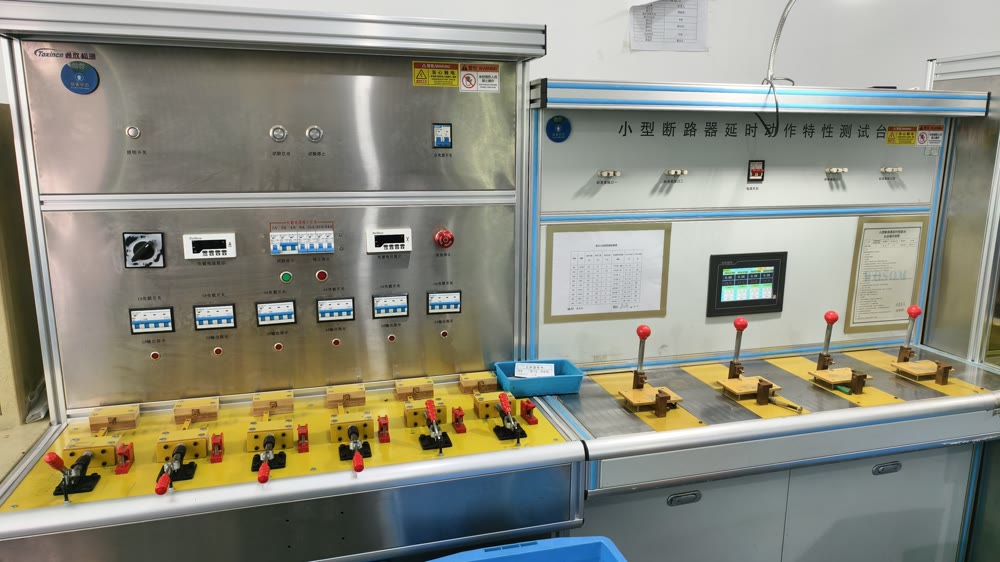
Circuit breaker delay-action test bench
04

Test capability

Development is only as good as what can be measured. Dedicated benches cover trip characteristics, residual-current operation, dielectric strength, temperature rise and ingress protection.

  • Trip-characteristic and delay-action benches
  • Residual-current test equipment
  • Dielectric and insulation testing
  • Ingress-protection testing for sealed enclosures
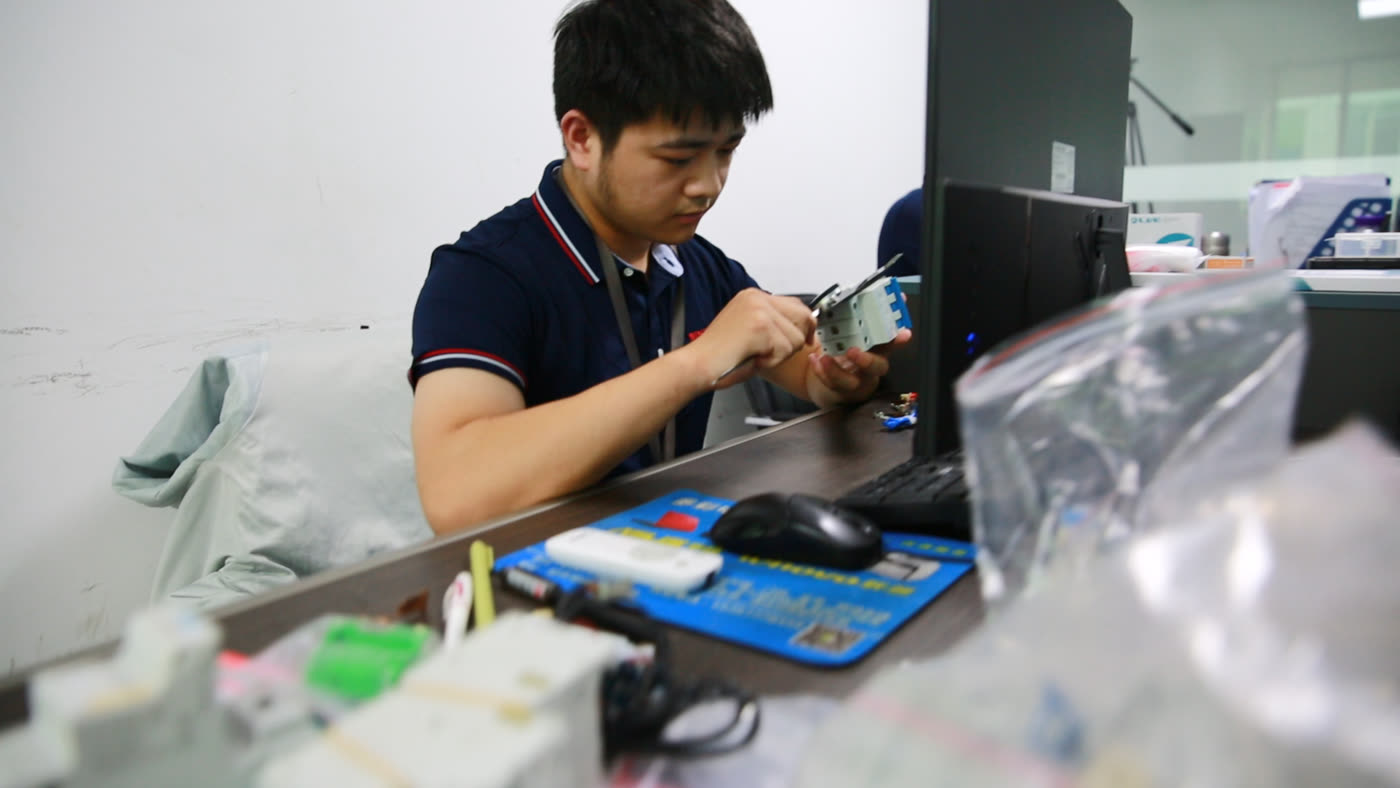
Engineer working on a prototype circuit breaker
05

Range development

New references are added where a market gap is real rather than where a catalogue looks thin — Type B residual-current protection for installations with inverters and DC-side EV charging is a recent example.

  • Gap identified from distributor and project feedback
  • Standards scope confirmed before development
  • Certification planned alongside the design
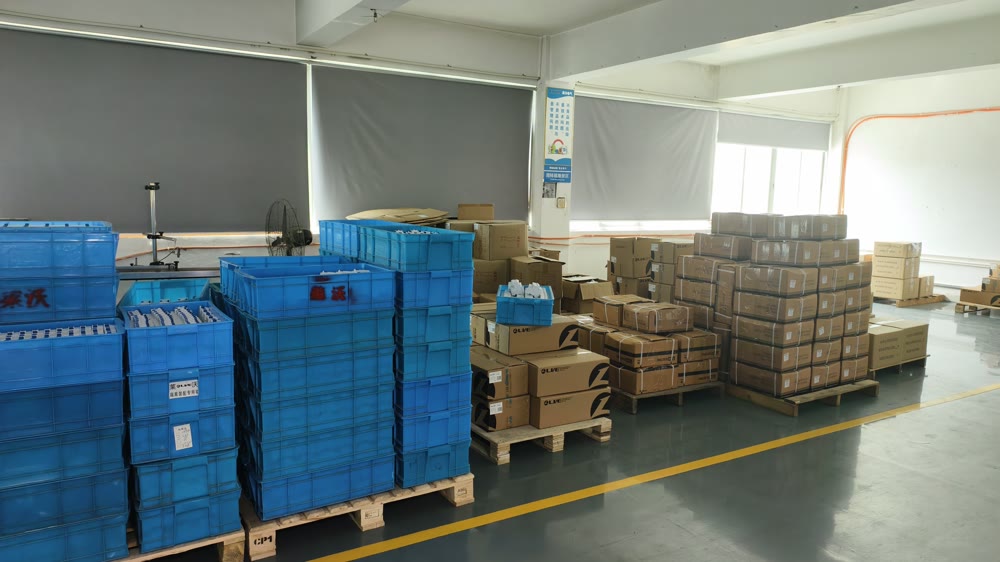
Finished goods packing and OEM shipment preparation
06

Customisation capability

The same engineering that develops our own ranges is what a private-label programme draws on, which is why configuration changes are assessed properly rather than promised and reworked later.

  • Structural and functional modification
  • Configuration and populated-device options
  • Assessment of approval impact before commitment
Project inquiry

Discuss your requirements with LAIWO.

Share the product range, application, quantity and destination market for a more useful first response.

Request a Quote