
Start with the electrical schedule
Define supply characteristics, incomer, outgoing circuits and spare ways before choosing the enclosure.
Commercial distribution-board selection depends on rated current, outgoing ways, fault level, incomer arrangement, metering and installation constraints.
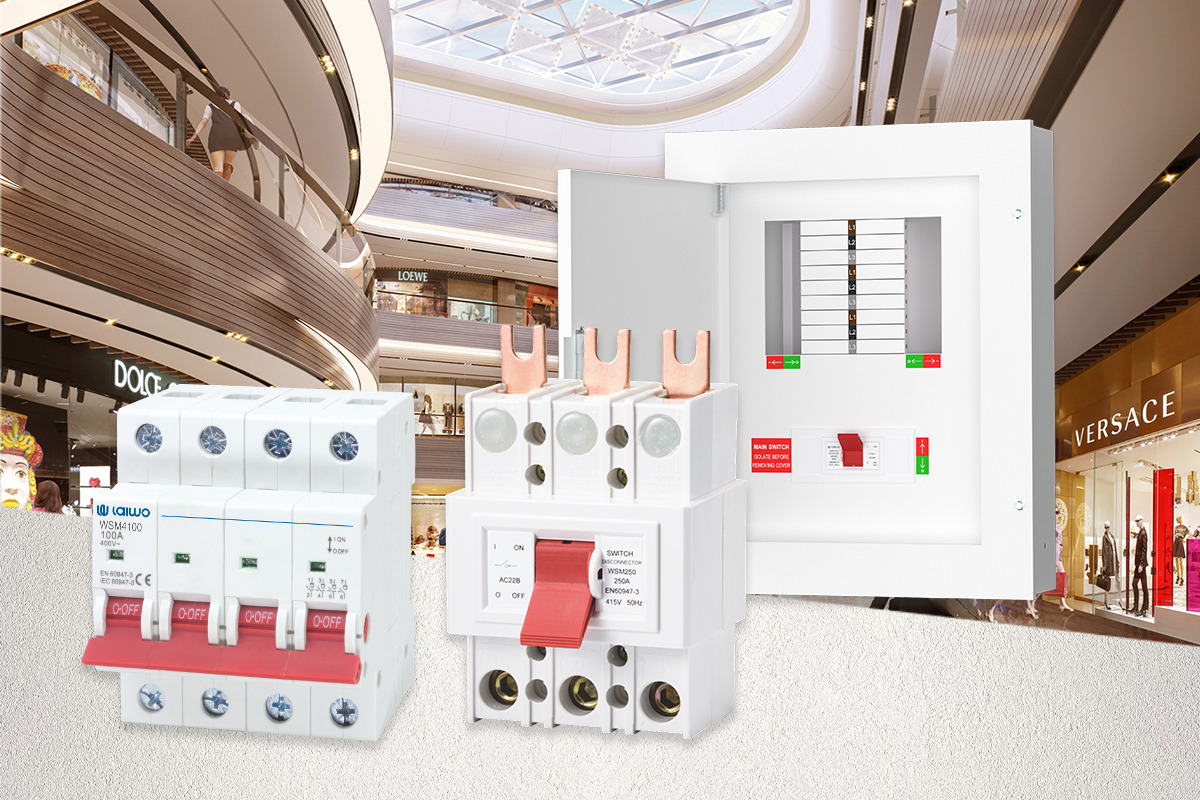
Three-phase supply arrives at one point and leaves across dozens of circuits. The board has to hold up against the site's prospective fault level, carry metering and spare ways, and still fit the space the drawings allow.
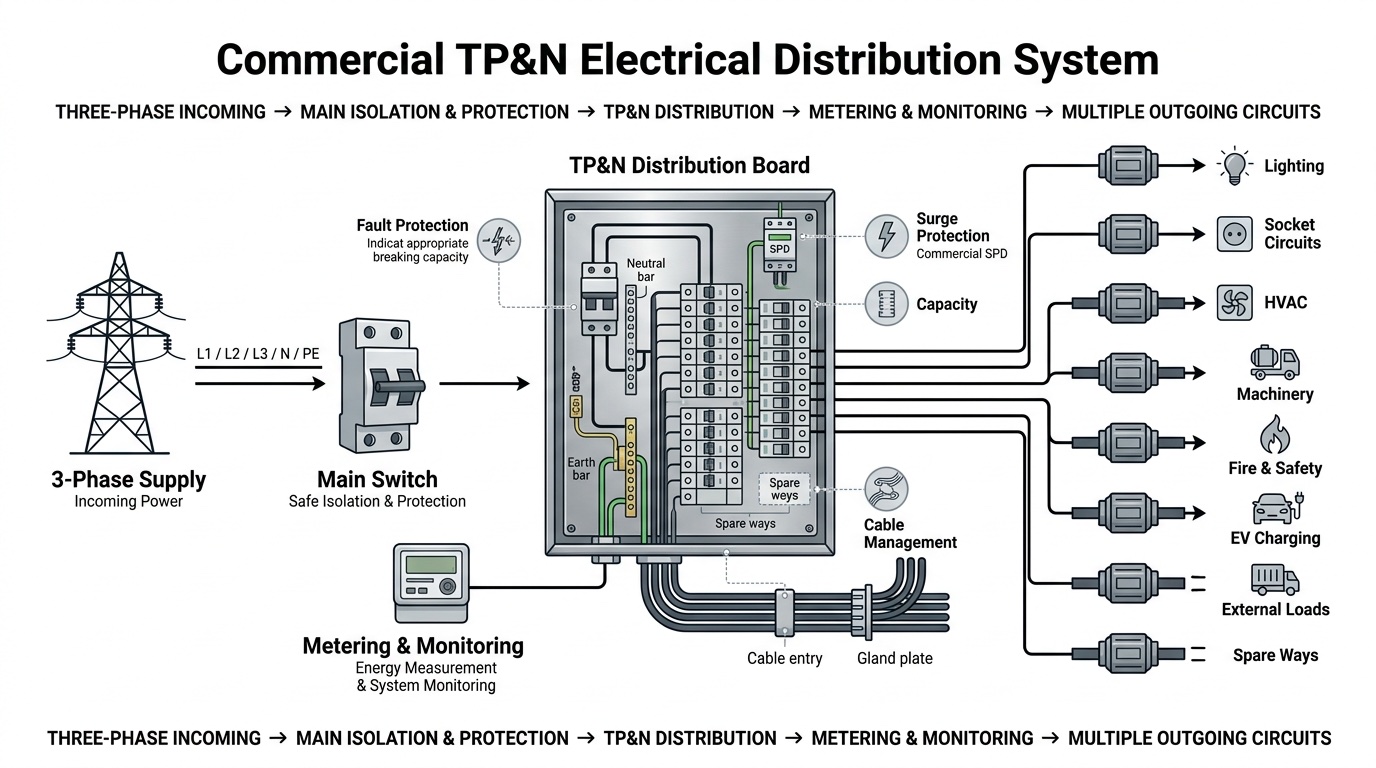
Board, busbar and outgoing devices are quoted against the project's electrical schedule, so the submittal package matches what is actually supplied rather than a catalogue page.
| Project requirement | LAIWO solution |
|---|---|
| Distribution | TP&N distribution board |
| Overcurrent | MCB |
| Surge | SPD |
| Plug-in systems | MCB metal distribution box |
| Documentation | Drawings, schedules, declarations |
A TP&N board is part of a wider electrical design, so a useful quotation needs more than the number of ways. The incoming supply, busbar rating, protective-device schedule, prospective fault level, metering and cable-entry plan all affect the configuration.
LAIWO’s commercial distribution path brings together TP&N enclosures, compatible protection devices and project documentation for panel builders, contractors, distributors and OEM partners.
Each stage reduces ambiguity before samples, technical review and quotation.
Define supply characteristics, incomer, outgoing circuits and spare ways before choosing the enclosure.
Match busbar and protective-device ratings to the project design and prospective fault conditions.
Review dimensions, gland plates, cable entry, neutral and earth terminals, metering and access.
Identify the datasheets, drawings, schedules, declarations and labels the project team needs.
Provide rated current, system details, outgoing ways, incomer, protective-device schedule, fault-level requirement, metering or SPD options, quantity and destination market.
Populated or project-configured supply can be reviewed where the outgoing schedule, compatible devices and required documentation are clearly defined.
Dimensional and installation information can be matched to the selected board reference. Request the current drawing with the quotation.
Choose the resource or sales route required for the next stage of product evaluation.
Review the existing product range before choosing a model or configuration.
Open downloads → 02 · VerifyTell us the model and market so sales can match the relevant document scope.
Request documents → 03 · EvaluateShare the product, rating, quantity and evaluation target for a sample discussion.
Discuss samples → 04 · SourceSend model, quantity, destination and OEM scope for a structured response.
Start an inquiry →