
Define the DC system
Record maximum voltage, operating current, source characteristics, polarity and installation architecture.
PV and other DC systems require devices documented for the relevant DC voltage, connection and fault duty; an AC rating cannot simply be carried across.
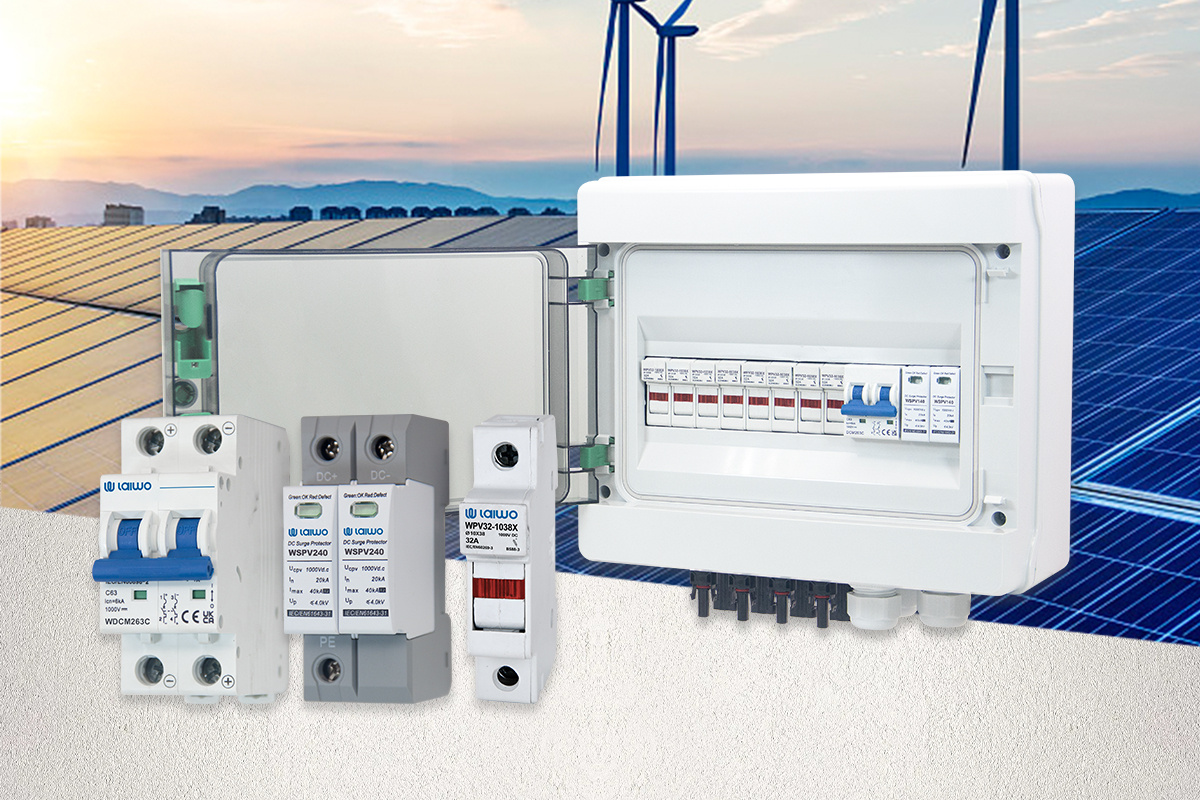
On the DC side of a PV array the fault behaviour is different from anything on the AC side. There is no natural current zero to help interrupt an arc, both conductors are live, and the array sits outdoors on a roof where it is exposed to both weather and lightning. Protection has to be selected for those conditions specifically.
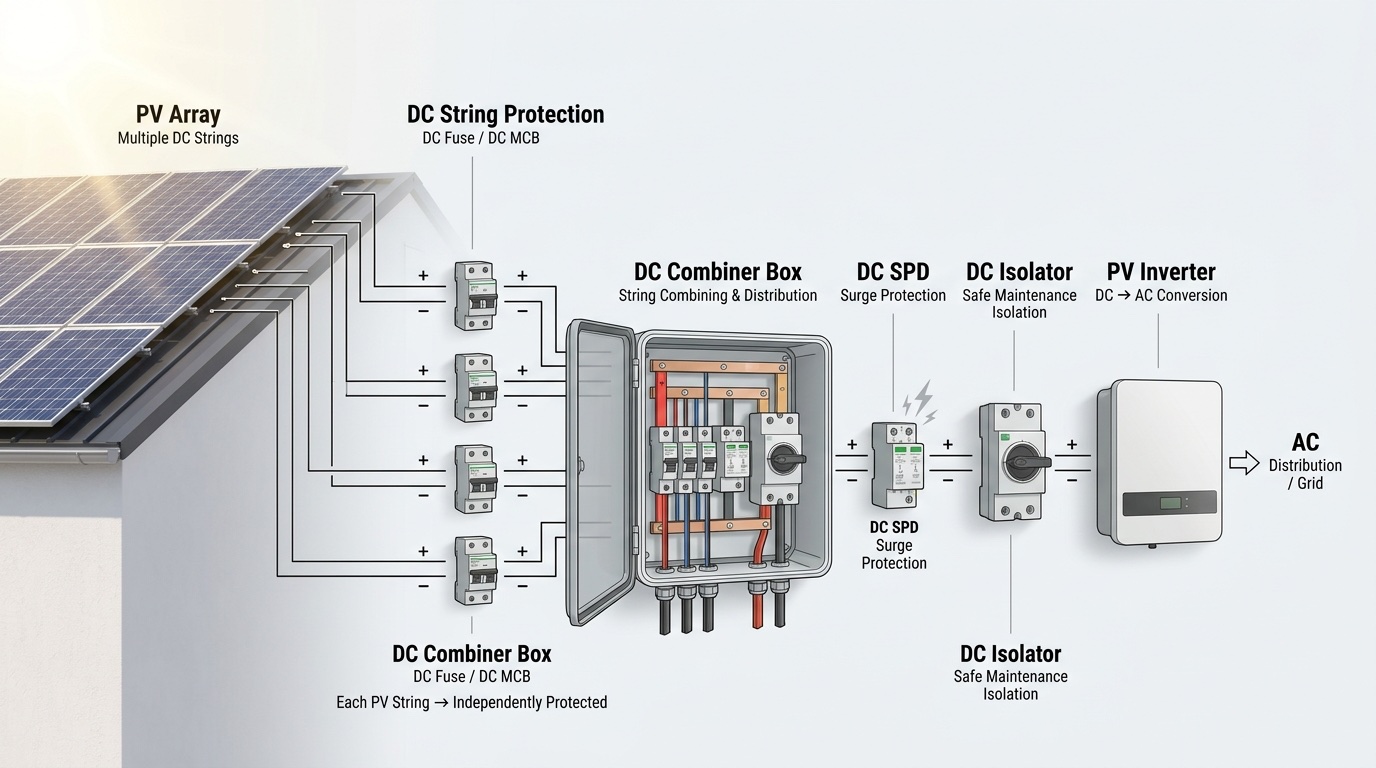
We build the DC side as one coordinated set rather than as separate components: gPV fuse links and matching holders, DC-rated isolation, Type 1+2 surge protection and the IP65 enclosure that houses them. Voltage class is the first decision — the 1000V and 1500V product sets are not interchangeable.
| Project requirement | LAIWO solution |
|---|---|
| String overcurrent | WPV-FU gPV fuse link, 10×38 or 10×85 |
| Fuse mounting and indication | WPV32 holder, indicator version |
| Isolation | WRI enclosed or RIS DIN-rail isolator |
| Surge | WSPV Type 1+2 DC SPD |
| Combining and enclosure | WENC IP65 combiner box |
| Array connection | 1000VDC PV connectors |
DC arcs and fault interruption differ from AC operation, making voltage, polarity, pole arrangement and connection method critical selection inputs. The exact device must be documented for the proposed DC application.
LAIWO’s solar and DC path covers DC breakers, PV fuses and holders, isolation, surge protection and solar distribution enclosures. Product selection should be supported by the current datasheet, wiring information and model-level approval scope.
Each stage reduces ambiguity before samples, technical review and quotation.
Record maximum voltage, operating current, source characteristics, polarity and installation architecture.
Separate overcurrent protection, isolation and surge-protection requirements before selecting devices.
Verify voltage, breaking capability, pole arrangement and wiring against the exact model datasheet.
Match devices, holders, enclosures, labels and technical files to the target application and market.
Only where the exact model is specifically rated and documented for the proposed DC voltage and connection. Matching current ratings alone is not sufficient.
Provide fuse size, maximum voltage, operating and fault current, utilization category, quantity, holder requirement, destination market and documentation needs.
A range can combine breakers, fuses, holders, isolation, surge protection and enclosures, subject to application and compatibility review.
Choose the resource or sales route required for the next stage of product evaluation.
Review the existing product range before choosing a model or configuration.
Open downloads → 02 · VerifyTell us the model and market so sales can match the relevant document scope.
Request documents → 03 · EvaluateShare the product, rating, quantity and evaluation target for a sample discussion.
Discuss samples → 04 · SourceSend model, quantity, destination and OEM scope for a structured response.
Start an inquiry →