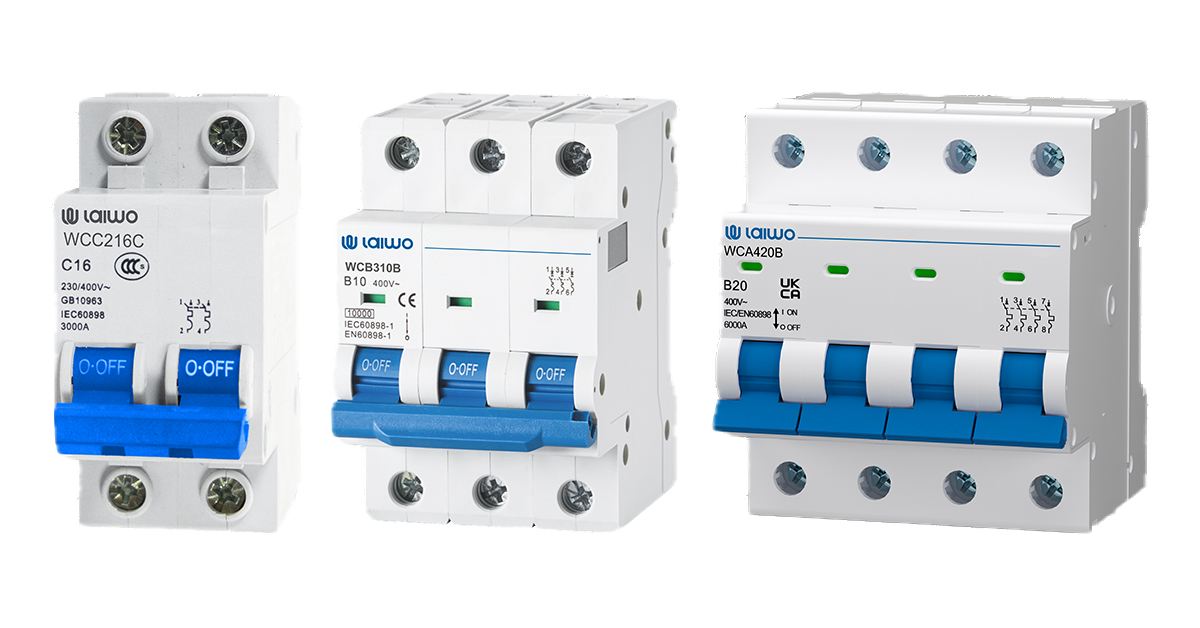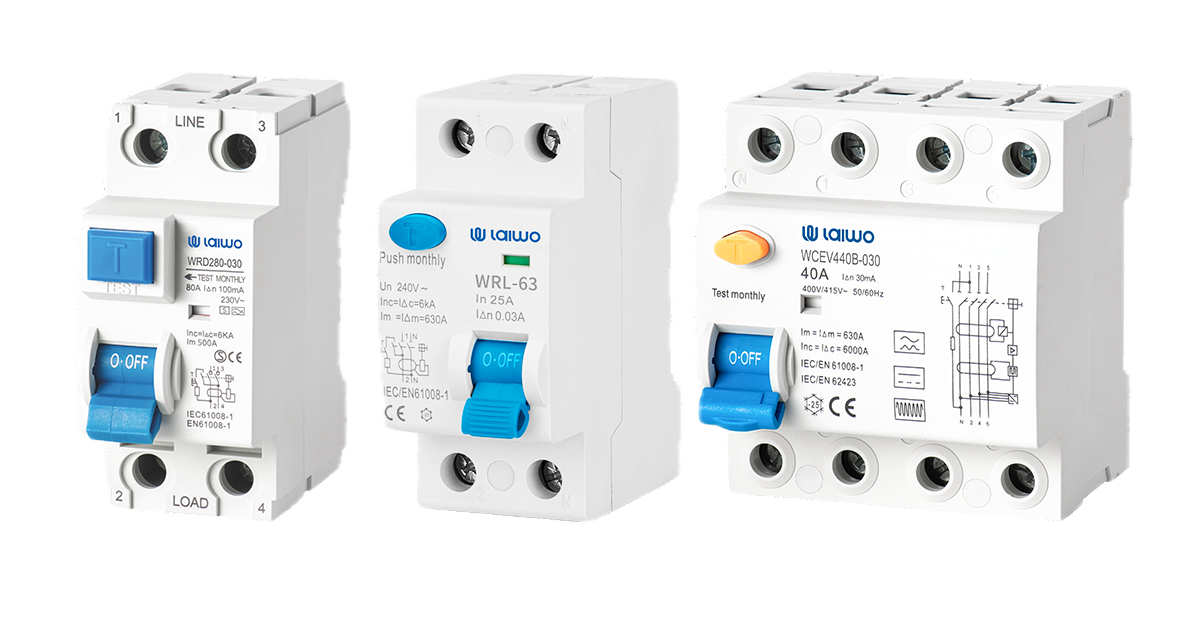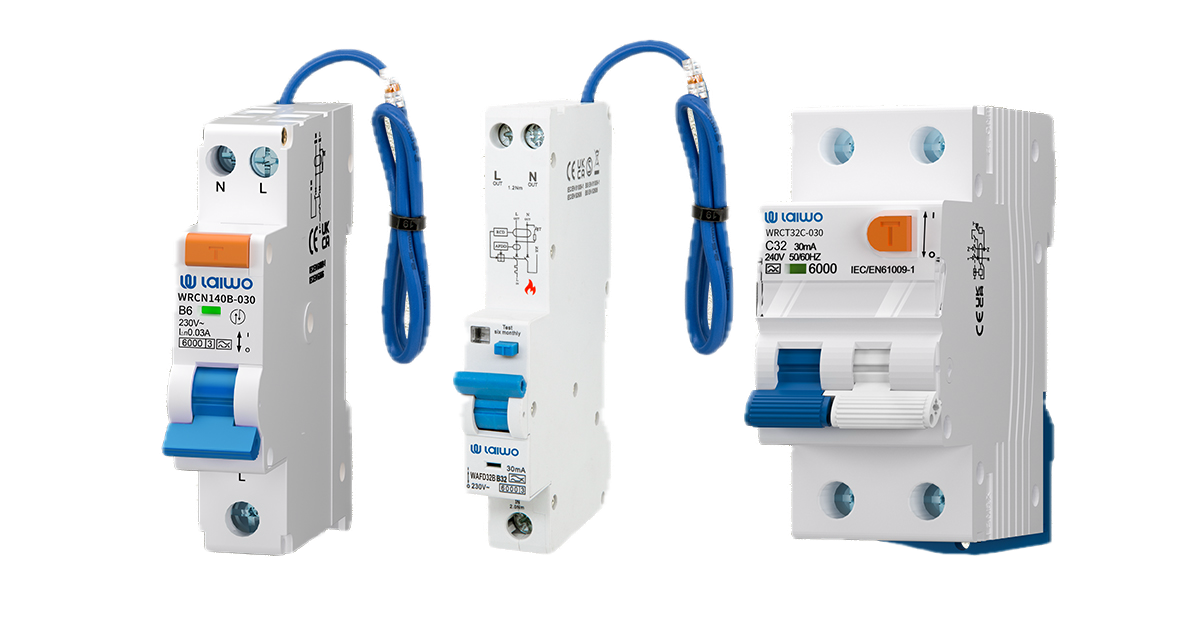
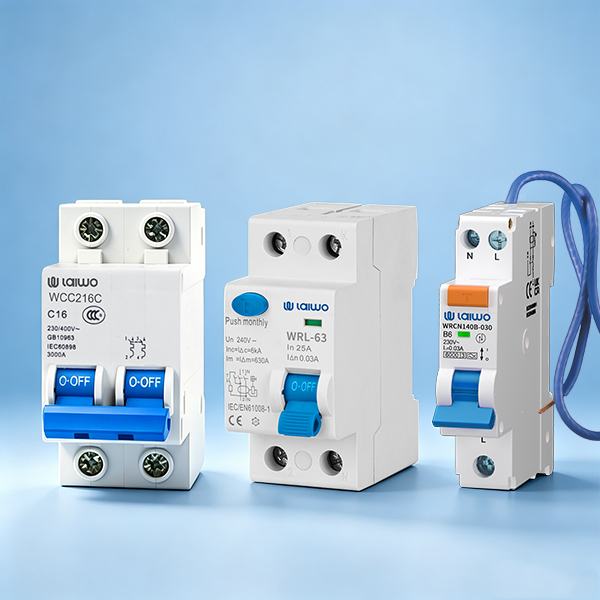
- An MCB protects against overload and short circuit.
- An RCCB monitors residual current but normally needs separate overcurrent protection.
- An RCBO combines both functions for an individual circuit.
- The correct arrangement depends on circuit design and market requirements.
What an MCB protects
A miniature circuit breaker is used for overcurrent protection. It interrupts the circuit when overload or short-circuit conditions exceed its designed operating characteristics.
What an RCCB adds
A residual current circuit breaker detects an imbalance between live conductors that can indicate leakage to earth. It is not a substitute for correctly selected overcurrent protection.
Type AC, A and B — and why it matters more every year
Residual current devices are classified by the waveform of leakage they can detect, and the classification has become a live specification issue rather than a footnote. Type AC responds to sinusoidal alternating leakage only. Type A adds pulsating DC components. Type B adds smooth DC.
The reason it matters is that modern installations contain electronics that were rare when Type AC was the default — inverters, variable-speed drives, and EV charging equipment. A smooth DC fault current in those systems can saturate the core of an AC or A device so that it no longer trips on anything, including the AC leakage it was fitted for.
Type B devices are covered by IEC/EN 62423, which is used together with IEC/EN 61008-1 rather than instead of it. If an installation has a PV inverter or a DC-side charging path, the device type is a design decision and not a substitution.
When an RCBO simplifies the arrangement
An RCBO combines residual-current and overcurrent protection for one final circuit. This can improve circuit separation and make fault identification more straightforward, although space, cost and configuration still need to be considered.
Information to include in an inquiry
- Circuit application and load type
- Rated current, poles and trip curve
- Residual-current sensitivity and type
- Breaking capacity and destination market
- Required marking, packaging and certificate scope
Final product selection must be checked against the project design, destination-market requirements and the approved manufacturer documentation for the exact model.